Hangzhou Zhiqinghe Tea Tech Co.,Ltd.
Since 1992.
Decoding EU Rules: How We Make Matcha with Low Aluminum
For buyers exporting matcha to Europe, aluminum content is often the main reason shipments fail tests, get rejected, and force frequent supplier changes. More and more EU importers require matcha to have less than 500 ppm aluminum—but many suppliers struggle to keep this consistent long-term, because aluminum levels are actually determined right from the tea garden soil.
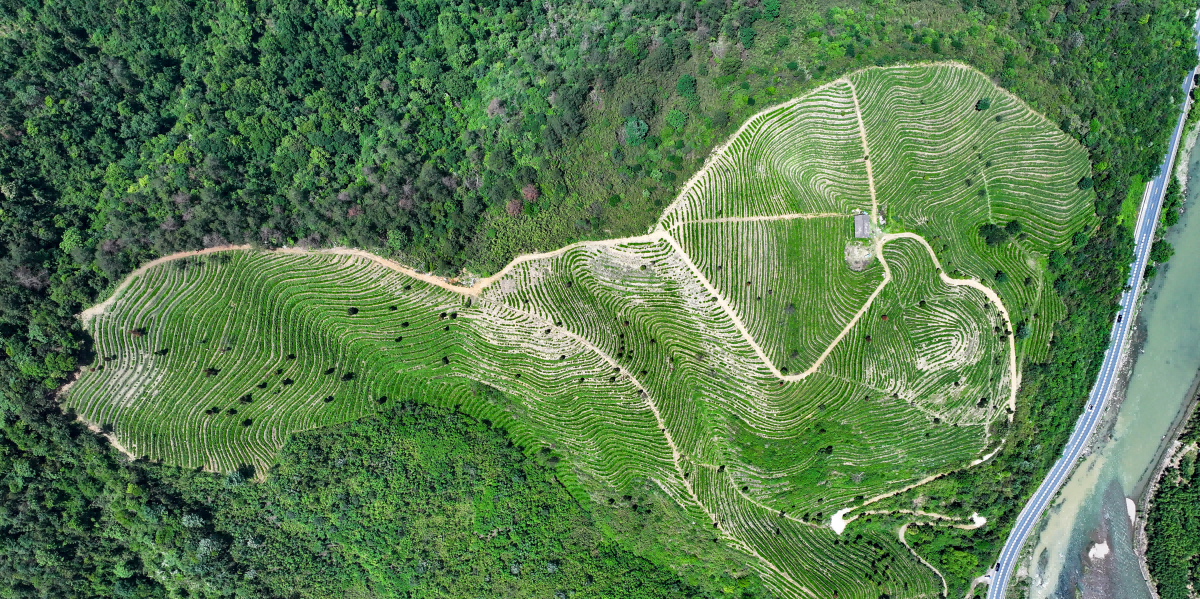
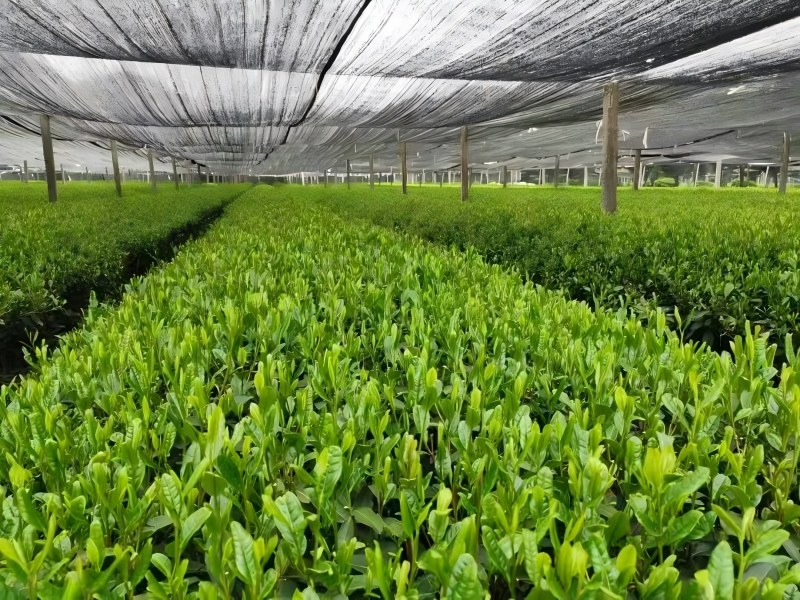
At Zhiqinghe, we control aluminum levels through our soil and cultivation management system. Our steps include adjusting soil pH, balancing minerals, and using science-backed tea farming methods. Our matcha usually stays consistently below 500 ppm aluminum, meeting requirements for most EU food brands, importers, and ingredient buyers.
Today, we’ll break down exactly where aluminum in matcha comes from—and share the strict steps we take to make every cup of matcha pure and safe.

Understanding EU Aluminum Regulations
The EU closely monitors contaminants in food and drinks to protect public health. Aluminum is naturally found in many foods, but too much intake over time carries risks. The EU keeps a close eye on heavy metal safety in food.
Back in 2008, the European Food Safety Authority (EFSA) set a Tolerable Weekly Intake (TWI) of 1 mg of aluminum per kg of body weight per week.
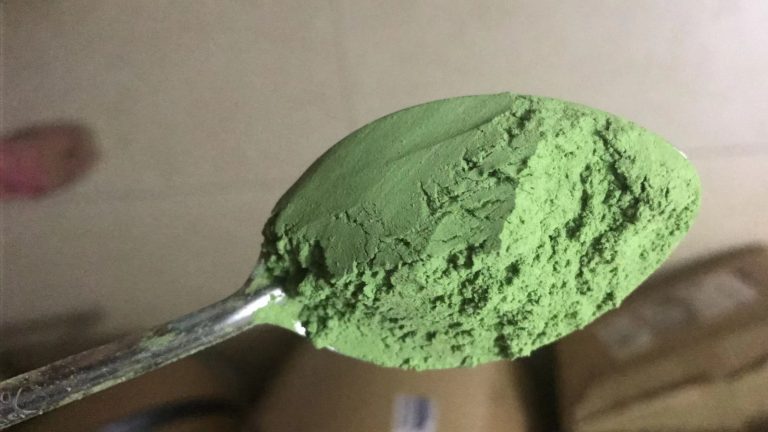
Regular commercial matcha (made by grinding whole tea leaves) usually has 10–100 mg/kg of aluminum. So for matcha suppliers exporting to the EU, controlling aluminum is a must-have entry requirement for the market.
Why Do Tea Plants Absorb So Much Aluminum?
Tea trees are acid-loving and thrive in soil with a pH of 4.5–5.5. In acidic soils, tea plants naturally absorb aluminum but lock it in their cells to prevent toxicity. However, if the soil becomes too acidic (pH below 4), more aluminum becomes soluble and can accumulate in the plant. This can reduce nutrient absorption and increase aluminum content in tea leaves.
What’s more, how you drink matcha makes aluminum exposure even higher. Regular tea is brewed and the leaves are thrown away, with only about 27% of aluminum seeping into the water. Matcha is ground into powder and eaten whole—so you take in far more aluminum than with regular tea. For your health, when you drink matcha, you shouldn’t just care about taste—you should choose low-aluminum matcha on purpose.
Risks of Ignoring Aluminum in Matcha
If aluminum levels go over the limit, your shipment will be rejected directly by customs. You’ll lose your deposit and damage your brand’s reputation.
Many factories can offer low-pesticide matcha, but they don’t have long-term data for deep heavy metal control—especially aluminum. If suppliers only sort products at the end instead of controlling from the source, batch failure rates will jump. That means more testing costs and longer restocking times for buyers.
If matcha with poor aluminum control hits store shelves, your could face returns, recalls, compensation, and other extra costs.
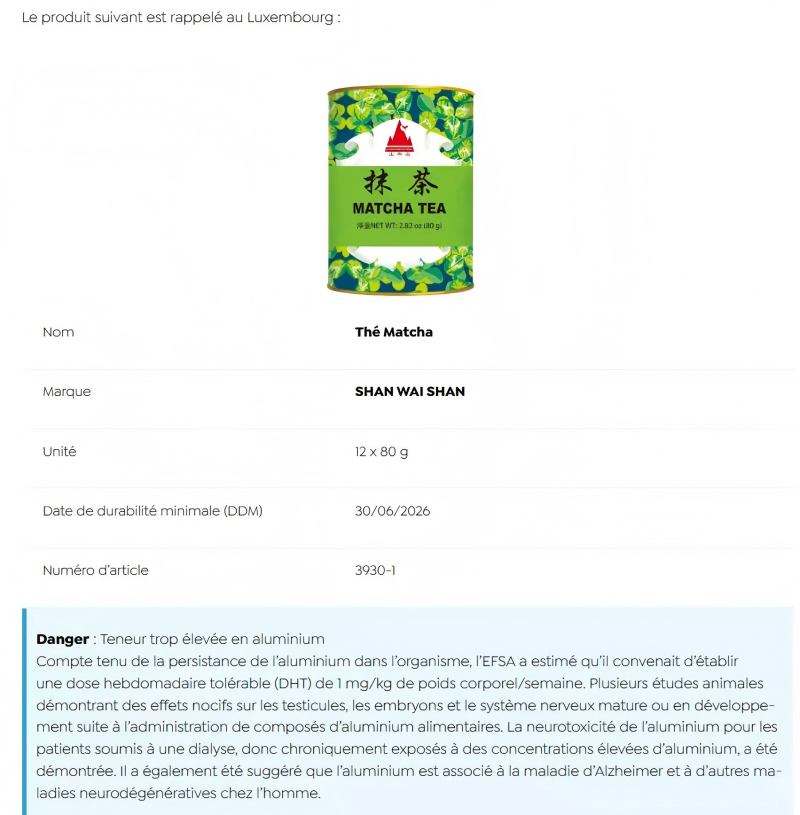
- Case: In 2024, Luxembourg’s food safety authority issued an official recall notice for a batch of “SHAN WAI SHAN” matcha, which was pulled from shelves and returned for high aluminum levels. Around the same time, Italy’s health department also announced a recall and sales stop for a batch of Chinese-imported SHAN WAI SHAN matcha for the same reason.

Our Approach to Low-Aluminum Matcha
We regularly check soil pH and use small amounts of lime—mostly magnesium-containing dolomite powder—to gently adjust acidity. We keep soil stably at pH 4.5–5.0, the ideal range for tea.
When pH drops below 4, stored aluminum in soil gets released. Raising pH slightly lowers active exchangeable aluminum and helps roots absorb nutrients like potassium and magnesium. To balance calcium and magnesium, our team at Zhiqinghe adds dolomite powder or light lime powder to boost available calcium and magnesium in soil. Higher calcium levels reduce how active aluminum is in soil water.
Calcium and magnesium ions compete for absorption spots on roots, blocking aluminum uptake and lowering how much aluminum tea roots take in. Picking and processing also affect aluminum in matcha. Studies show that young buds and the first two leaves contain about 150–200 μg/g of aluminum, while mature older leaves contain over 300 μg/g. Some matcha suppliers grind leaves from the whole plant, making aluminum levels way too high. Zhiqinghe only uses young buds and the first two leaves and process them with traditional steaming methods. This keeps our finished matcha powder’s aluminum level much lower than the market average and meets EU TWI standards.
But that’s not all, we run regular soil testing and traceability management. Every year, we fully test tea garden soil: pH, cation exchange capacity, exchangeable aluminum, and nutrient levels.

Great Matcha Is Backed by Official Test Data
At Zhiqinghe, we control tea quality right from the source and prove it to our customers. We work with multiple third-party laboratories. We actively test different batches according to customer requirements.Our tests include:
- Physical & chemical indicators: particle size, moisture, total ash, theanine content, etc.
- Heavy metals: aluminum, lead, cadmium, mercury, arsenic, etc.
- Pesticide residues: over 500 items scanned for full precision.
At Zhiqinghe, we believe matcha should be a pure source of energy, not a burden of environmental pollution. We combine traditional Japanese farming wisdom with modern EU safety standards to bring you matcha that’s both ceremonial and safe.