Hangzhou Zhiqinghe Tea Tech Co.,Ltd.
Since 1992.
Hangzhou Zhiqinghe Tea Tech Co.,Ltd.
Since 1992.
Pile driving has started at Zhiqinghe's new matcha factory in China. See what this foundation stage means for B2B buyers and which documents to request.
Zhiqinghe is an organic matcha factory and manufacturer in Hangzhou, China. Construction is underway on our new factory building, with foundation work marking one of the early stages of the project. This development is intended to expand our existing processing facilities and support future operations.
As part of the foundation work, 32 foundation piles are being constructed. Each pile measures 1 meter in diameter and 14 meters in depth. These piles will provide structural support for the new building and form an important part of the construction process.
Video: Pile Driving Work in Progress
Video: Pile Driving Equipment in Operation
For B2B buyers, this stage offers a closer look at the development of Zhiqinghe’s new facility and how the project fits into our existing production operations.
Most matcha supplier audits focus on processing equipment, grinding facilities, and packaging areas. However, the construction stage also provides useful insight into a factory’s development. Pile driving marks an early stage of foundation work for a new building. While it shows that construction is underway, buyers should also understand the planned building scope and how it will support future operations. Site information, business documents, and production records can help provide a clearer picture of the supplier’s actual capabilities.
For Zhiqinghe, the new factory building is part of an established plantation-backed production model. Our existing operations cover tencha processing, grinding, and quality control under one operating system. The new building is intended to expand our in-house processing facilities and complement current operations. For buyers, understanding the existing production setup and the purpose of the new building provides a more complete view of Zhiqinghe’s manufacturing capabilities.
| Audit dimension | What counts as acceptable | What the buyer should do |
| Site and foundation | Verifiable address, visible construction activity, permit on request | Ask for site photos or video with date, and the building permit reference |
| Building scope | Clear statement of which steps the new building will house | Ask which steps are in-house today and which are coordinated with partners |
| Existing vs. future capacity | Current capacity stated separately from future capacity | Verify the supplier’s current annual capacity separately from any planned capacity for the new building |
| Ownership model | Plantation-backed vs. partner-coordinated stated plainly | Ask which steps are in-house and which are coordinated with partners |
| Certification scope | Each certificate stated with its scope and issuing body | Ask for certificate copies and confirm they cover the product and market |
| Testing | Third-party testing scope agreed at order stage | Lock pesticide, heavy metal, and microbiology scope in writing |
| Traceability | Retention samples, batch file, label version archive | Request a sample batch file package before the trial order |
Use this list as a document checklist during qualification. Which certificates Zhiqinghe holds, and which products and markets they cover, should be confirmed against your target market at inquiry stage.
If a supplier cannot separate “certificate,” “laboratory report,” and “regulatory statement,” treat that as a documentation risk, not a marketing detail.
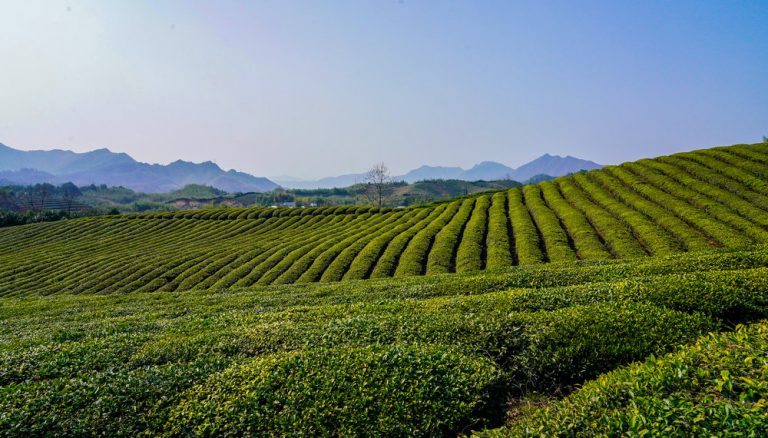
Zhiqinghe combines 133 hectares of organic tea plantations, 800 metric tons annual matcha capacity, Japanese cultivars including Yabukita and Chong-cha 108, and about 2 hours to Shanghai and Ningbo ports. As a matcha factory and manufacturer in China, we support beverage, bakery, foodservice, and private-label programs with repeatable QA onboarding and export-ready documentation.
Upstream control: Plantation-backed raw material supply supports batch stability.
In-house processing: Tencha processing through grinding and QC under one operating system.
Export practicality: Document packages, packaging execution, and trial orders from 5 kg for selected OEM projects.
OEM and ODM support: OEM covers production, filling, labeling, and packaging according to buyer-approved specifications and artwork. ODM support focuses on application and formula guidance within existing process capabilities, rather than full product or brand development. Buyers remain responsible for confirming label claims, ingredients, origin statements, and regulatory compliance in their destination markets.
Share your target market, application, and packaging needs. We can help you plan a factory visit or video audit, sample qualification, and an export document checklist.
Button: Request samples / documents
Trust line: We will reply after we review your requirements.
Q1. Does the new factory construction affect current matcha production or delivery?
Existing production, packaging, and export documentation continue as normal. Buyers can still request relevant batch records and retention samples for trial orders.
Q2. Can I visit the site while the pile driver is working?
Yes, with advance scheduling. Visitors should expect site safety arrangements to apply during active construction. Peak visit seasons are around May and October.
Q3. What is a pile driver doing on an organic matcha factory site?
It installs the foundation piles that support the new factory building. A properly designed foundation provides structural support for the new building and the equipment installed inside it.