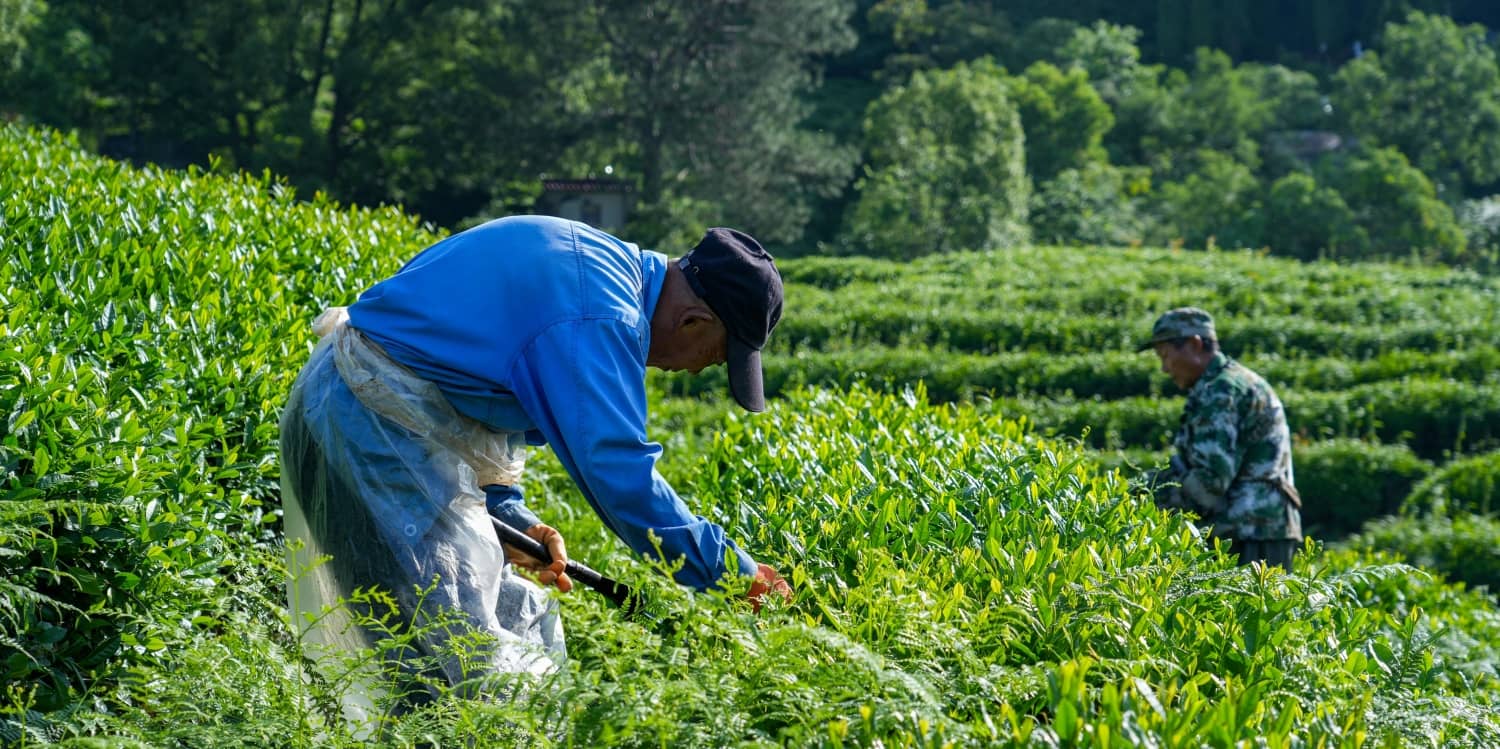
Before Qingming, Zhiqinghe Tea Farm is already busy
The Spring Equinox has just passed
This is when the harsh winter has just gone and is pushing north, laden with rain. It’s the equinox, the days and nights are the same length, with warm, gentle sunshine – neither dry nor harsh. For tea trees, this isn’t just a solar term – it marks the start of their most critical growing period. After a long winter dormancy, their roots wake up in the warm soil and eagerly absorb water and nutrients.
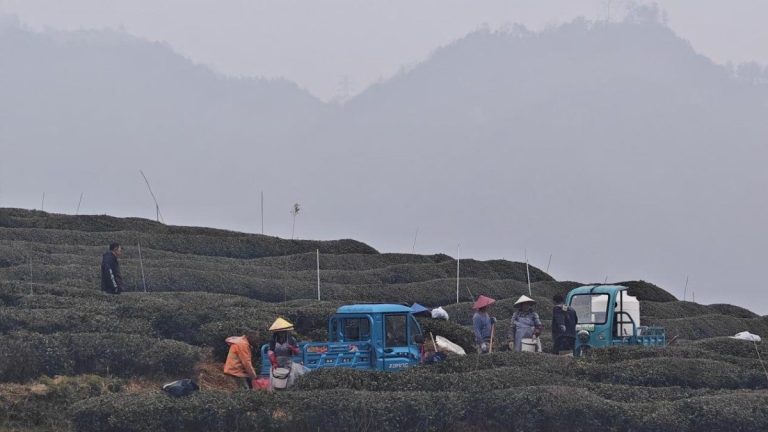
Getting ready for work at the Zhiqinghe Tea Farm
It’s the prologue to a race against time. Every bit of sunshine, every drop of rain, and every well-timed field care after the Spring Equinox shapes the fresh, crisp, and mellow flavor of that cup of spring tea around the Qingming Festival.
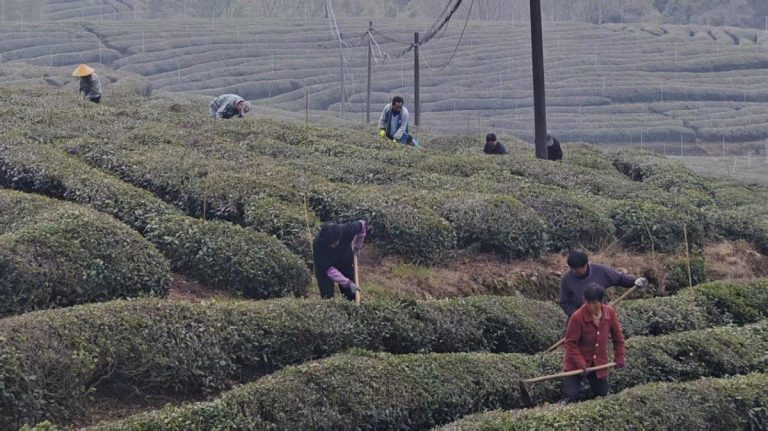
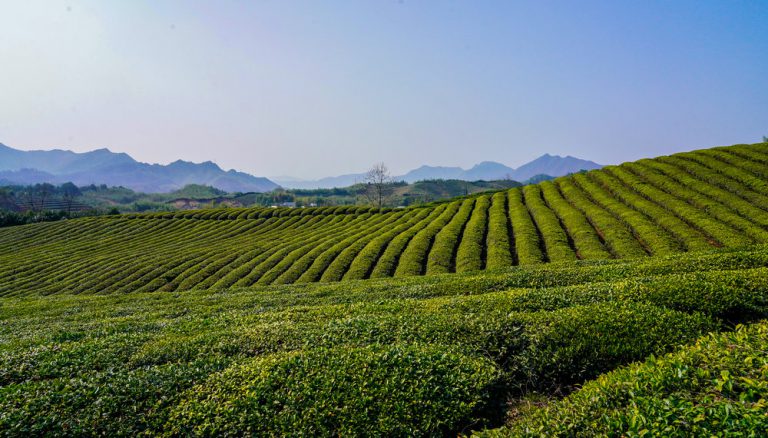
The morning mist hasn’t fully lifted yet, but you can see and hear everyone busy at work among the tea trees. Workers are scattered in twos and threes among the neat rows of tea bushes. Their hoes rise and fall in rhythm, tilling the soil and clearing overwintering weeds deftly. Their uniform hoes glint in the sun. Each strike of the hoes falls in a practiced rhythm, like a silent ensemble.
The tea farmers are loosening the soil
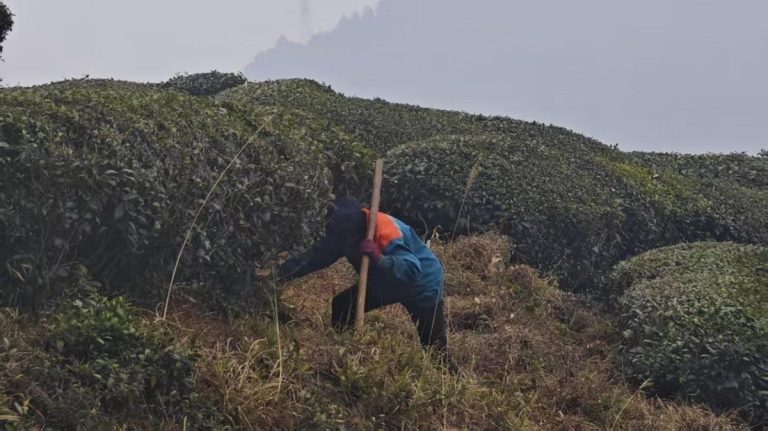
As the hoes strike, they flip over clods and turn over the grass roots that have slept all winter. In between swings of their hoes, the hatted aunt is stooped low, delicately tending the area around the tea trees’ bases. It’s a sensitive part of the tree. Heavy tools might damage the old roots or snap off the tiny shoots. So most of the work has to be done by hand. In those tight corners where a hoe just won’t fit, they’ll just crouch down. They slip their fingers into the soil cracks, find the weed stems, and pull them out by the roots—and just like that, the weeds competing with the tea plants for spring vitality are pulled up by the roots
The tea farmer is weeding
After this careful weeding, workers move on to the next: fertilizing the freshly tended tea bushes, giving them the nutrients they need.
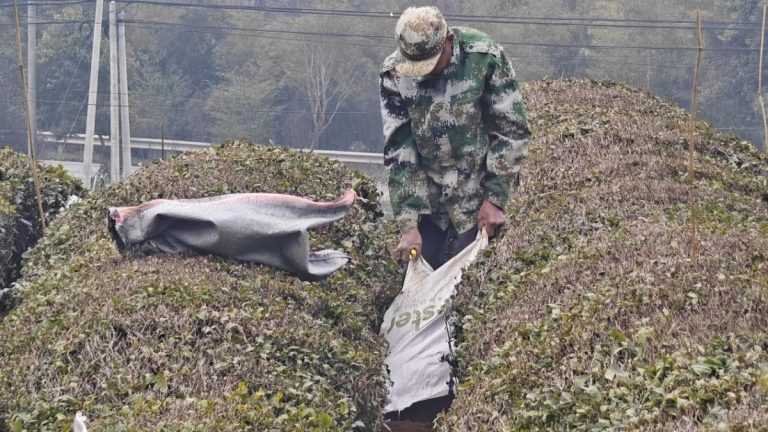
The way they fertilize is simple and effective. A worker grips the corner of a heavy woven bag and lugs it slowly through the tea rows. This bag is packed with fermented chicken manure. Then he leaves the bag open, and you can see the dark, well-rotted manure streaming out, spilling naturally onto the moist soil that’s just been weeded.
It’s all about feel—how much to pour, how fast to walk. They adjust their walking speed and the bag’s angle, letting the dark fertilizer flow in a steady stream that settles softly around the tea bushes’ bases. The fertilizer covers the bare topsoil and seeps into the gaps around the roots. There’s no dust – just a thick layer of mulch and the rising scent of fertile earth mixed with rich humus. It’s a simple act, but it feeds the land – returning the gift from another cycle of life to this waiting, sprouting land in the most direct way.
The tea farmer is applying organic fertilizer
From hoeing the soil, to bending down weeding, to pouring bags of chicken manure onto the ground, these steps have been around for centuries, breathing in unison with the land they tend. It’s all based on feel – experience handed down through generations, and a natural respect for the seasons. Those simple nutrients around the roots keep the tea garden alive, letting it sprout fresh, fragrant leaves every spring.